FAQ - Woodinville Tree Care Pros
Frequently Asked Questions
Are permits required for tree removal on private property in Woodinville?
A tree removal permit is required for any proposal to remove significant trees, unless otherwise exempt in WMC 21.50.030. To obtain a tree removal permit, you must first complete a Tree Removal Application, including a site plan and necessary supporting documents such as replanting plans and arborist reports. Submit applications through the City’s online Permit Portal at www.ci.woodinville.wa.us/416/Tree-Protection-Removal.
What circumstances qualify for tree removal without full permit requirements in Woodinville?
Removal of more than two trees per 12-month period or four trees per 24-month period shall only be permitted under the Development Services Director’s discretion for purposes of tree thinning or removal of dead, nuisance, or hazard trees. An unlimited number of hazard or nuisance trees may be cut with an arborist report and permit.
Must property owners notify neighbors before removing trees in Woodinville?
While Woodinville does not currently mandate specific public notice posting requirements for tree removal on private property, professional communication with adjacent neighbors is considered a best practice for maintaining positive community relations and preventing disputes regarding tree work.
What financial commitment should Woodinville homeowners expect for residential tree removal services?
The typical expense for emergency tree removal services in Woodinville is $931. Tree removal costs vary based on multiple factors—smaller trees typically range between $400–$700, mid-sized trees cost $800–$1,800, while large or hazardous specimens often exceed $2,500 and can reach significantly higher amounts depending on complexity and site conditions.
What represents standard stump grinding costs throughout the Woodinville area?
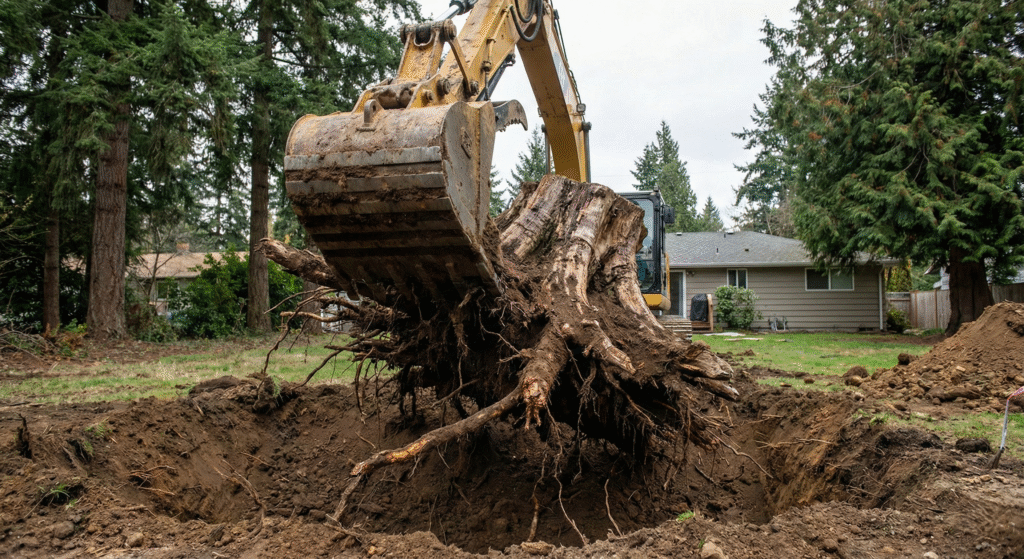
Stump removal costs $100 to $500+ per stump, depending on size and method. Stump grinding generally ranges from $250–$550, depending on stump diameter, root system complexity, location accessibility, and site-specific challenges. The complexity of root systems and whether the site is accessible to grinding equipment affect final pricing.
Do emergency tree services cost more throughout the Woodinville area?
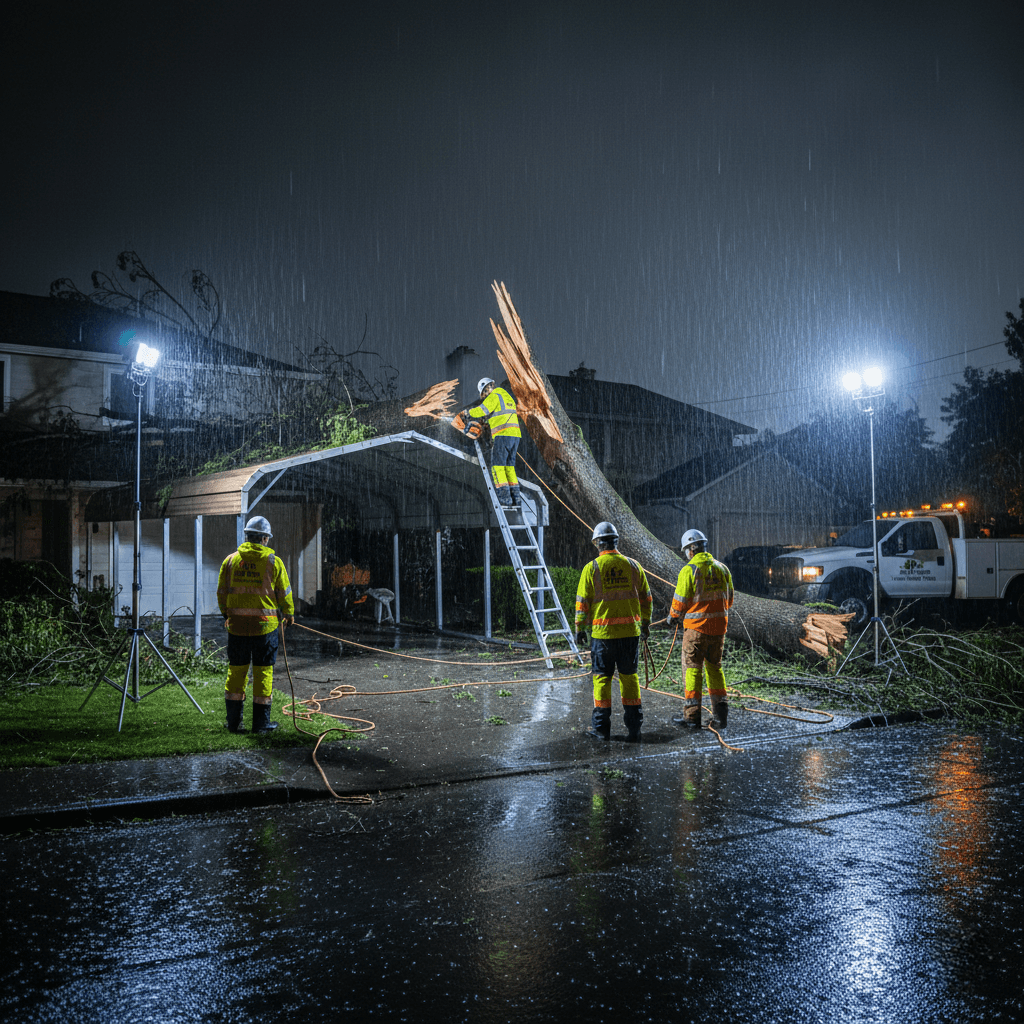
Yes, emergency response involves premium pricing due to urgent scheduling requirements, potential overtime work, hazardous operating conditions, and immediate availability needed for storm damage or safety threats. Same-day or next-day tree removal often costs 2 to 3 times the standard rate, though this service proves essential when trees pose immediate threats.
What licensing and credentials should tree service contractors possess in Woodinville?
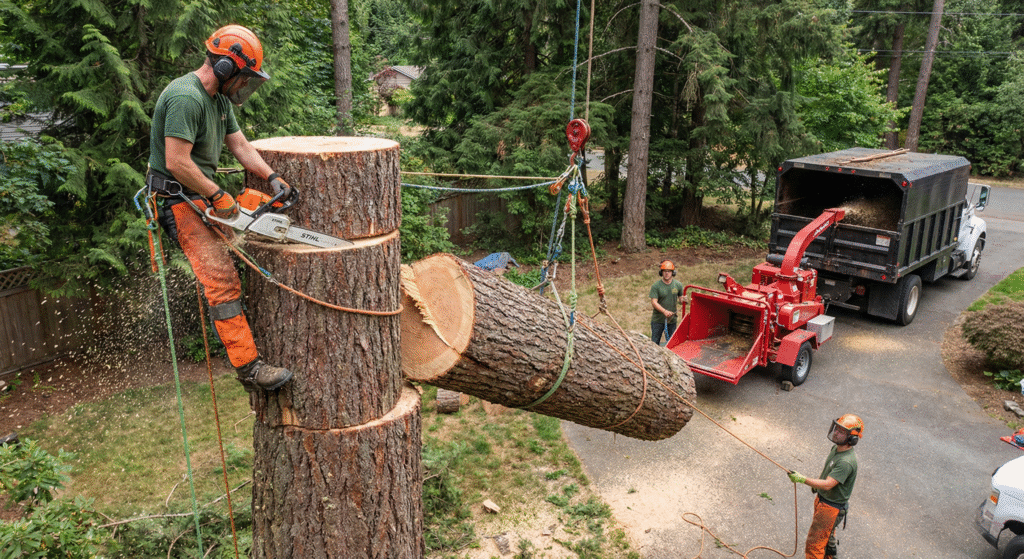
All tree removal and pruning works on public property shall be performed by a licensed, bonded, insured, and qualified tree professional. Tree service contractors should maintain Washington State contractor licensing, adequate commercial general liability insurance, and ISA (International Society of Arboriculture) certification. If an arborist report is needed, it must be done by an arborist certified by ISA with secondary certification in tree risk assessment.
When represents the optimal time for tree pruning in Woodinville's Pacific Northwest climate?
Late winter through early spring, during dormancy, works optimally for most deciduous trees in Woodinville (typically late November through February). Winter pruning minimizes stress on trees, reduces disease transmission risk, and allows easier assessment of tree structure. However, flowering trees that bloom on old growth should be pruned immediately after bloom completion in late spring.
How can property owners identify if their tree is dead or declining?
Key indicators include branches remaining leafless throughout the growing season, brittle or cracking limbs that snap easily, visible bark separation or peeling exposing inner wood, fungal growth or mushrooms at the base indicating rot, a hollow sound when the trunk is tapped, or excessive deadwood accumulating throughout the canopy, warranting professional arborist assessment.
Do chemical stump removal treatments work effectively in Woodinville's climate?
Chemical applications may accelerate natural stump decomposition over an extended period, typically several months to years, but prove generally insufficient as standalone solutions. Professional grinding or excavation provides faster, more reliable results and eliminates potential regrowth. For permanent removal in Woodinville’s moist Pacific Northwest climate, mechanical methods are strongly recommended.
May homeowners trim overhanging branches from a neighbor's tree in Woodinville?
Yes, Washington law allows you to prune branches extending onto your property up to the property line, but only from your side without trespassing onto your neighbor’s property. You must not damage the tree’s health or structural integrity through improper pruning, and you cannot throw debris back onto your neighbor’s property after trimming.
Who bears responsibility if a neighbor's tree damages property in Woodinville?
Washington follows the “act of God” rule—if a healthy tree falls during a storm or unforeseeable event, your homeowner’s insurance typically covers damages. If the tree showed obvious signs of neglect, hazardous condition, or disease that the owner knew or should have known about, your neighbor may be held liable for resulting property damage.
Can property owners remove trees on shared property boundaries without neighbor consent?
No, under Washington law (RCW 64.12.030), trees straddling property lines are considered common property requiring written consent from all affected property owners before any removal or major trimming work. Violations can result in treble damages, attorney fees, and civil liability under Washington’s timber trespass statute.
How long does natural root decomposition take after tree removal in Woodinville?
Large root systems may require 5–10 years for complete underground decay in Woodinville’s climate, depending on soil moisture levels, temperature variations, species characteristics, and root system size. Woodinville’s moist Pacific Northwest climate with adequate rainfall can accelerate decomposition compared to drier regions.
What should property owners do first if a tree falls on a house in Woodinville?
Prioritize safety immediately—evacuate if necessary and avoid all contact with power lines or downed electrical wires. Document damage thoroughly with photographs for insurance claims, then contact your insurance carrier promptly and a licensed tree service provider for emergency removal. For emergency right-of-way tree issues during business hours, call Public Works at 425-489-2700.
Does homeowner's insurance cover tree removal after storms throughout Woodinville?
Tree removal is usually covered by homeowner’s insurance if the tree harms a covered structure, with typical coverage ranging from $500 to $1,000 per tree. Insurance typically covers removal costs when trees damage structures or block necessary access routes, but may not cover general cleanup of fallen trees causing no property damage.
What questions should homeowners ask tree contractors before hiring in Woodinville?
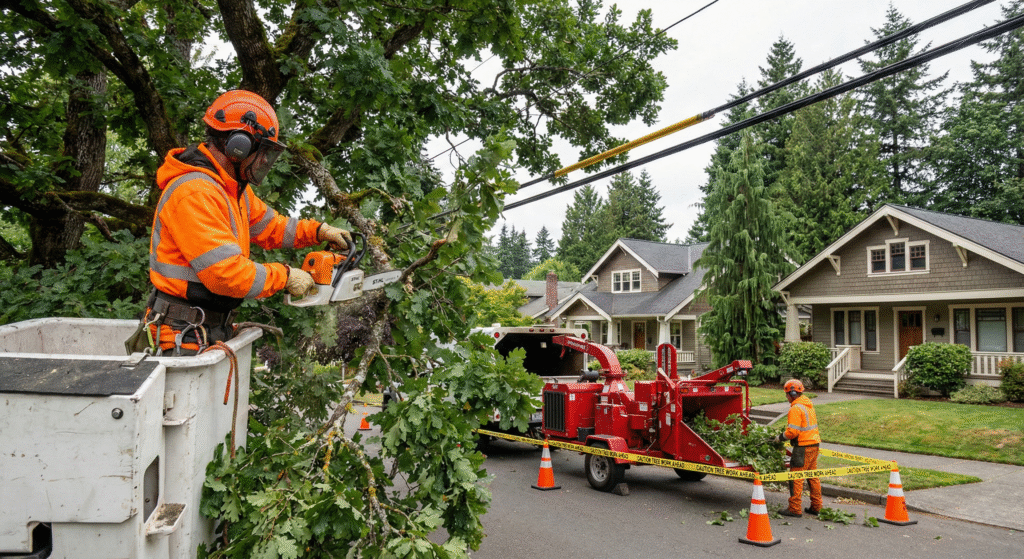
Ask about the current Washington State contractor licensing and bonding status, proof of adequate liability insurance protection, references from recent Woodinville-area projects, comprehensive project timeline estimates, cleanup procedures after completion, warranty specifics and coverage limitations, ISA certification and tree risk assessment credentials, and their approach to safety protocols when working near structures or power lines.